
Some words about Sophrology
The Origins of Sophrology
Sophrology was developed in 1960 by Professor Alfonso Caycedo, a neuropsychiatrist, who sought to enhance the therapeutic practice of hypnosis prevalent at the time. Inspired by his travels across Asia, he incorporated diverse relaxation techniques such as meditation, yoga, and other preventive practices into his method. These practices, deeply rooted in Asian cultures, emphasize prevention and self-care through meditation, relaxation, and massage—elements far more integrated into daily life than in Western cultures.
Combining these Eastern traditions with the insights of modern medicine, Caycedo created a new, holistic method that unites the mind and body. Sophrology is not just a blend of techniques; it’s a comprehensive approach that draws on both ancient wisdom and contemporary scientific knowledge to address well-being in a balanced and effective way.
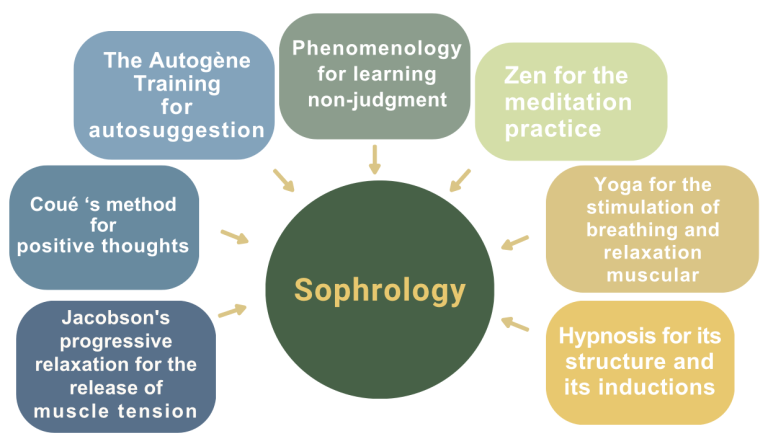
Sophrology was developed in 1960 by Professor Alfonso Caycedo, a neuropsychiatrist, who sought to enhance the therapeutic practice of hypnosis prevalent at the time. Inspired by his travels across Asia, he incorporated diverse relaxation techniques such as meditation, yoga, and other preventive practices into his method. These practices, deeply rooted in Asian cultures, emphasize prevention and self-care through meditation, relaxation, and massage—elements far more integrated into daily life than in Western cultures.
Combining these Eastern traditions with the insights of modern medicine, Caycedo created a new, holistic method that unites the mind and body. Sophrology is not just a blend of techniques; it’s a comprehensive approach that draws on both ancient wisdom and contemporary scientific knowledge to address well-being in a balanced and effective way.
This combination of practices, reinforced by scientific knowledge, including neuroscience, makes sophrology a comprehensive approach. The work on body and mind is inseparable: when the body is calm, the mind follows, and vice versa. Sophrology focuses on restoring balance by helping individuals reconnect with their bodies, learning to listen to its messages and needs, and responding in the most beneficial way.
Sophrology is not just a relaxation technique—it’s a method that empowers individuals to give their bodies the rightful place in their well-being journey. Whether starting with the mind or the body, the goal remains the same: a harmonious balance between the two.
Sophrology is grounded in biology, not in mystical beliefs
It’s a practical method based on how our nervous system works. At its core, it helps regulate the balance between your sympathetic nervous system (which activates your stress response) and your parasympathetic system (which triggers relaxation).
Through simple, proven techniques, sophrology works on three time dimensions:
- Present: Learning to find calm in the moment by regulating your nervous system
- Future: Using visualization to create new neural pathways and achieve your goals
- Past: Gaining perspective on past experiences while accessing your current resources and strength
The practice uses conscious breathing, muscle relaxation, and mental imagery to help you:
- Become more aware of your physical tensions and release them
- Identify stress triggers and develop better coping strategies
- Align your body, emotions, and mind
- Bridge the gap between your intentions and actions
Visualization plays a key role, not through magic but through neuroscience – when we visualize, we create new neural patterns that help us act more consciously and effectively. This helps to :
- Recognize and work through unconscious blocks
- Better understand and manage your emotions
- Develop strategies for challenging situations
- Create alignment between your values and actions
What is the difference between sophrology and hypnosis ?
Hypnosis is more about guided mental imagery, while sophrology is a holistic approach combining mental visualization with physical awareness and movement.
Hypnosis primarily uses visualization techniques where the therapist guides you through a structured path, suggesting specific mental images and scenarios. The approach is direct and intuitive, with the therapist leading the way.
Sophrology is more comprehensive as it combines visualization with bodywork. Sophrology uses both suggestion and induction, though the line between them is subtle. The practitioner guides you through visualization while incorporating bodywork, breathing exercises, and physical awareness. Rather than directing, they create space for personal exploration. The practitioner acts as a guide, letting you discover your own journey rather than directing it.
Sophrology gives equal importance to the body and the mind, aiming to restore the body to its rightful place in our overall well-being.

More than just a practice, a way of living
Sophrology is primarily preventive—a mental and physical gymnastics designed to enhance daily well-being. It promotes a sense of calm, ease, and better preparation for navigating anxious situations with confidence. Through regular practice, it fosters alignment with personal desires, a deeper understanding of the body, and a meaningful connection to its needs.
Like any form of exercise, the more it is practiced, the more states of calm and mental clarity become an integral part of daily life, naturally spreading and settling over time.
As a sophrologist, I must embody the calm and peace I wish to inspire in those I work with—I am my first client.
This hasn’t always been easy. Transitioning from a life where slowing down felt nearly impossible was a challenge. I used to live at full speed, always rushing, even speaking rapidly. Today, I take the time to live, to breathe, and to savor life.
In an era where everything moves so fast, it’s more important than ever to reclaim the time to simply give ourselves that precious time.
Those who talk about it
Among the well-known personalities who inspire me, one I particularly enjoy listening to and highly recommend is Andrew Huberman. He is a neuroscientist and professor at Stanford University who shares incredible insights on his podcast, “The Huberman Lab”. His work on explaining how the human body and brain function provides a solid scientific foundation for understanding how sophrology can be used to improve well-being. For example, his episodes on the nervous system and stress regulation help clarify how breathing techniques and mindfulness practices directly influence our physiological state, aligning perfectly with sophrology principles.
Another figure I admire is Joe Dispenza. He focuses on guided visualizations and meditation, basing his work on the idea that our thoughts and emotions can shape our reality. His meditations combine neuroscience, quantum physics, and ancient practices to help people reprogram their minds and create positive change in their lives. His approach complements sophrology, especially in using visualization as a tool to build self-awareness and foster transformation.